
Key Takeaways
- Check for injuries before helping your loved one up after a fall.
- A medical follow-up matters even when no injury is visible.
- Home hazards like loose rugs and poor lighting raise fall risk.
- Fear of falling again is a real emotional response that deserves honest conversation.
- Repeated falls can be a sign that more daily support is needed.
What Families Face After a Loved One Falls
A fall can happen in a moment, and it can leave your whole family feeling shaken and unsure of what to do next. Whether it happened at home, outside, or in the middle of a routine task, the experience tends to raise a lot of questions about safety and what comes next. It’s completely normal to feel a mix of worry, relief, and uncertainty all at once.
Knowing the right steps to take after a fall can help your loved one stay safer, recover more comfortably, and give your family a clearer path forward. From the first moments after a fall to longer-term conversations about senior living support, here’s what families can do to respond thoughtfully and with care. If you’re also wondering whether your loved one needs more structured support day-to-day, the guide on how to choose the right level of care is a helpful place to start.
Immediate Steps to Take Right After a Fall
The first thing to do is resist the urge to rush. Before helping your loved one up, take a moment to ask how they feel and look for any signs of injury. Pain in the hip, wrist, or head, trouble moving a limb, or any confusion are all reasons to call for medical help right away.
If they seem okay and want to get up, help them do so slowly and carefully. Your calm presence matters more than you might think. When you stay steady and reassuring, it helps your loved one feel safe rather than embarrassed or frightened. A gentle tone and a few slow, steady breaths can go a long way in those first few minutes.
What a Medical Follow-Up Should Cover
Why a Doctor Visit Matters Even Without Visible Injury
It might be tempting to skip the doctor if your loved one seems fine after a fall. However, some injuries, like hairline fractures or internal bruising, don’t always show up right away. A medical checkup can catch what isn’t immediately visible and give everyone peace of mind.
A doctor can also look at balance, strength, and coordination, which can all contribute to fall risk. Medication is another area worth reviewing, since some combinations can cause dizziness or affect steadiness on their feet.
Questions to Bring to the Appointment
Going into the appointment with a few specific questions can make the visit more useful for your whole family. Ask the doctor to walk through your loved one’s individual fall risk factors, since these can vary widely from person to person. A medication review is also a good ask, especially if your loved one takes multiple prescriptions.
How to Assess Safety at Home After a Fall
Common Home Hazards Worth a Second Look
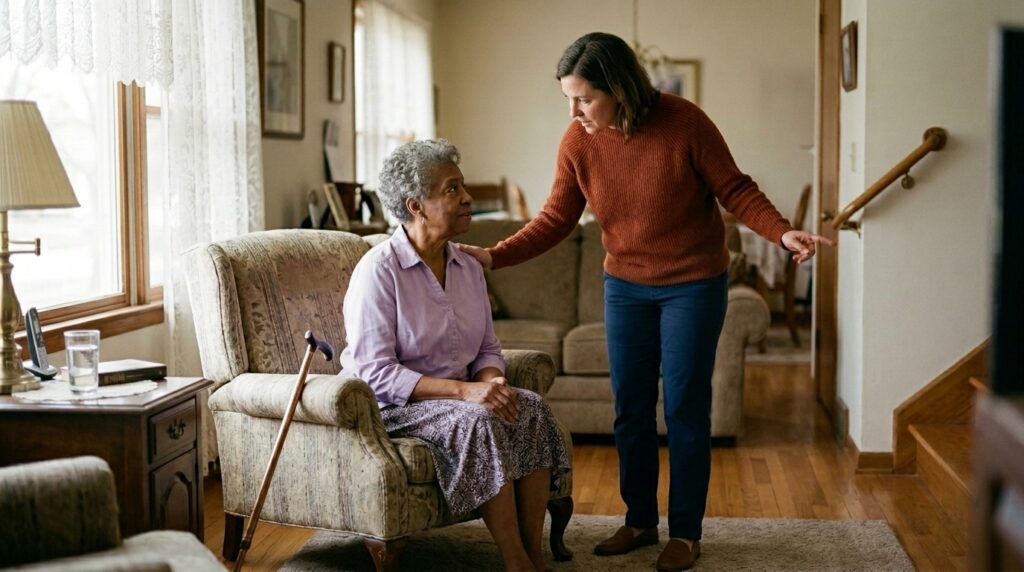
After a fall, it’s worth doing a slow walkthrough of your loved one’s living space with fresh eyes. Loose rugs, dim hallways, and cluttered pathways are among the most common tripping hazards in the home. These are small changes that can make a noticeable difference in day-to-day safety.
Bathrooms deserve special attention. A wet floor with no grab bars or a tub without any support can be a real challenge for someone navigating reduced balance or strength. Simple additions like grab bars and non-slip mats can reduce risk meaningfully.
When Home Modifications May Not Be Enough
Sometimes even a well-modified home doesn’t fully address the level of support your loved one needs. If falls are happening more than once, or if close calls are becoming frequent, that’s a signal worth taking seriously. It doesn’t mean something has gone wrong. It means your loved one may benefit from more consistent daily support.
Independent living and memory care communities are designed with this in mind, offering environments built around safety, engagement, and wellbeing from the ground up.
The Emotional Side of a Fall for Seniors and Families
Fear of falling again is one of the most common responses seniors experience after an incident, and it’s completely valid. That fear can quietly lead to pulling back from activities, spending more time alone, and losing the drive to move through daily life freely. Over time, that kind of withdrawal can affect both physical and emotional health.
Honest, supportive conversations as a family can help your loved one feel heard rather than managed. Let them share how they’re feeling without jumping straight to solutions. Moving forward together starts with listening first.
When It Might Be Time to Consider Senior Living
Signs That More Daily Support Would Help
If your loved one is struggling with meals, mobility, or keeping up with daily routines, those are meaningful signs that more support could help them thrive. Frequent falls or near-misses are also worth noting. These patterns often point to a need for a more consistent, structured environment.
How Senior Living Can Support Long-Term Wellbeing
Senior living communities offer more than safety. Assisted living, independent living, and memory care options can provide your loved one with daily structure, social connection, and nutrition designed to support long-term health.
At Longevity of Granite City, our focus is on enriching life through purposeful engagement and chef-prepared, nutrition-forward meals. If your family is ready to explore what that kind of support looks like, scheduling a personal tour is a great next step.